
Liberty Lost
The painting didn't start as Liberty.
It started as a newspaper photograph taped to the wall of the studio — the Statue in the harbor on a hazy August morning, her copper green softened by the heat. The painter had meant to copy her. A straight portrait. A tribute.
But the brushes wouldn't do it.
The first stroke went wrong. Black where there should have been sky. The second tried to correct it and dragged the first one sideways, smearing the crown into a storm cloud. He left it.
For weeks he came back and tried to find her face in the mess.
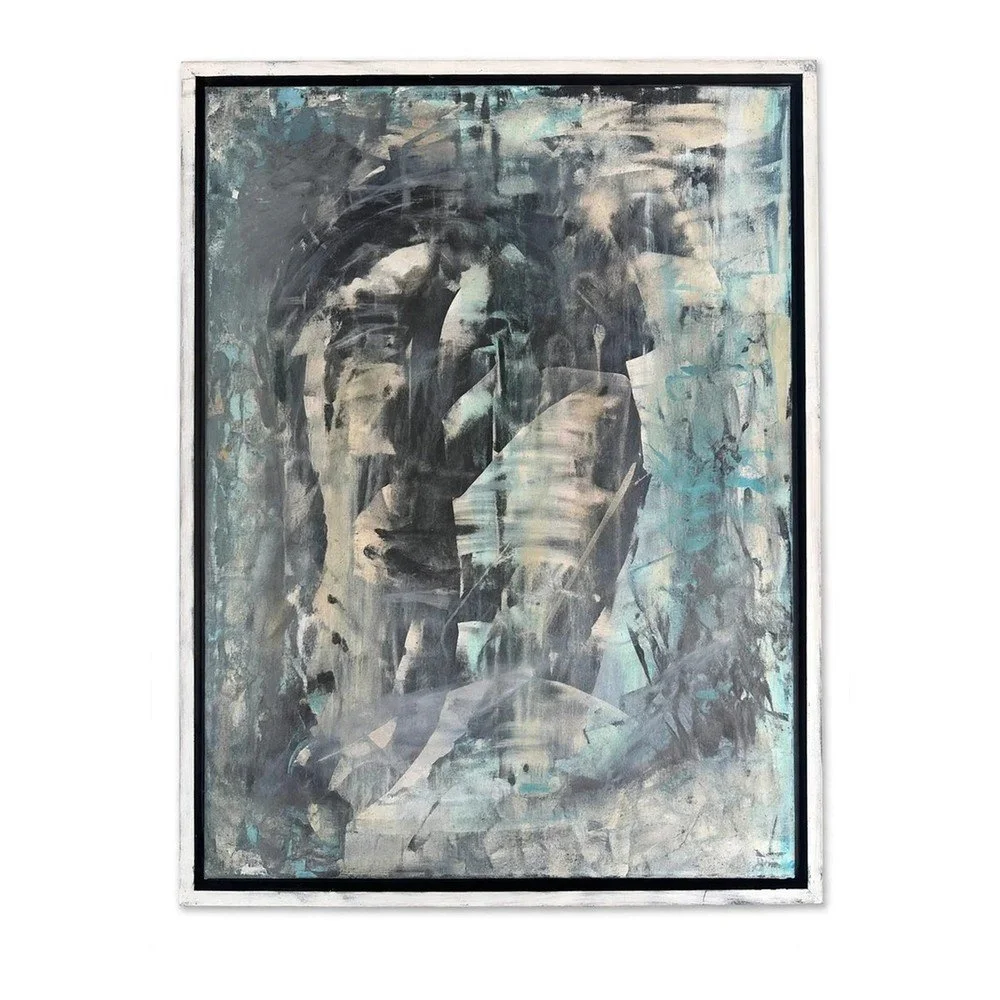
Look closely and she is still there.
You can see her if you don't look too directly — the way you see a face in the clouds before it dissolves. The tilt of a cheekbone, left of center, in bone-white and soot. The shadow of an eye, half-closed against the wind. The hard, vertical line of a nose that becomes a cliff. Below it, the suggestion of a shoulder, a robe, but the robe has become weather, become scaffolding, become smoke.
The colors are the colors of distance. Not the bright patina green we put on postcards, but the real colors of the harbor when you've been looking too long: sea-glass blue, concrete gray, the yellowed white of old newsprint, and a black that isn't paint but the space where paint has been scraped away.
He called it Liberty Lost not because someone took her, but because of how loss actually happens.
It doesn't happen with a single, clean topple. No dramatic crash into the water for the cameras. It happens like this painting happened — layer by layer. A compromise here, a careless stroke there. A bright thing painted over because the painter was tired that day. A line blurred because it was easier to blur than to make it true.
Each layer was reasonable at the time.
And then one morning you step back and you realize you can no longer find the face you came to paint. You know it was there. You can prove it was there from the first sketches underneath. But the surface now is all weather and forgetting, all the gray-blue noise of a world that kept talking over her.
The beauty of the painting is that she isn't completely gone.
If you stand in front of it long enough — and it asks you to stand a long time — the eye reassembles her. The abstract marks cohere. The veil of brushstrokes thins.
She is still there, under the palimpsest. Waiting for someone with steady enough hands to paint her back out.
Or at least, to remember that she was ever there at all.
Medium: Acrylic / Mixed Media on Canvas - Framed Original
Color Palette: Gray, Aqua Blue, Ivory, Black, Taupe
Style: Abstract Figurative, Contemporary, Wabi-Sabi
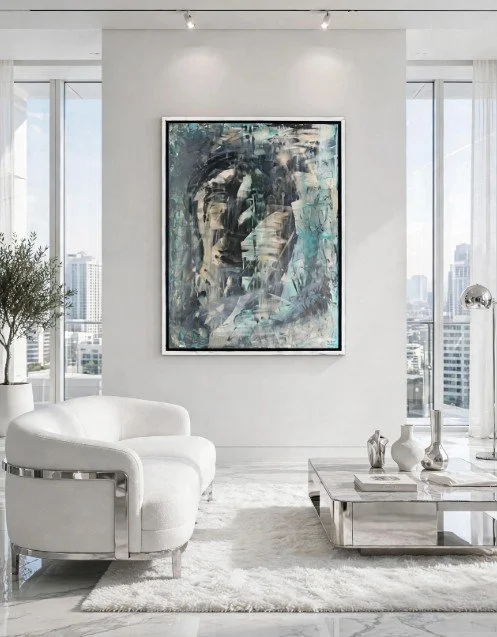
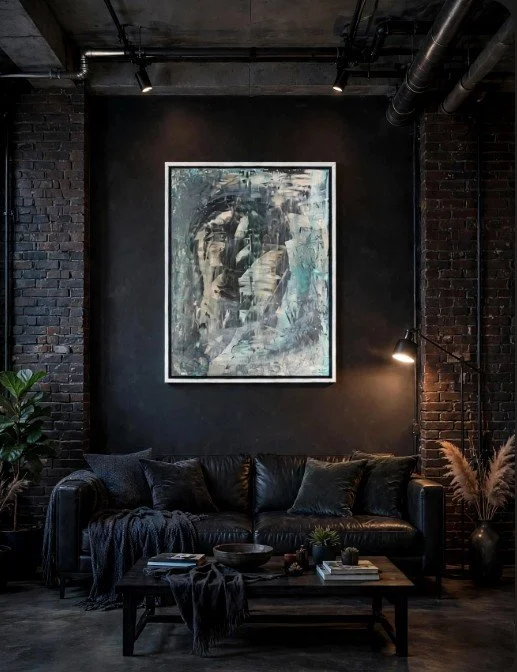
Vibe: Moody, Calm, Sophisticated, Coastal Contemporary
Dimensions: 32.5 × 42.5 × 2.5